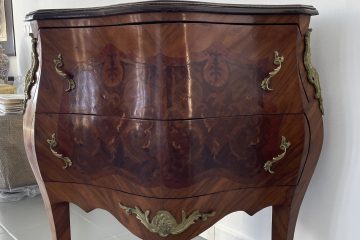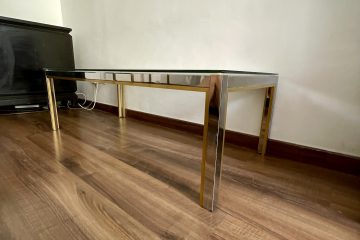

Chinoiserie is how Europe imagined the East for centuries: black and red lacquers, birds amongst flowering branches, pagodas and hand-painted porcelain. Far from being a passing fad, it remains one of the most elegant ways to add character to an interior. We explain what it is and how to use it in your home.
What is chinoiserie?
The term comes from French and describes the European decorative style inspired by the art of China and East Asia. It emerged in the 17th century, when porcelain, lacquerware and silks began to arrive in Europe via maritime trade, and reached its peak in the 18th century. As Oriental lacquers were very expensive, European craftsmen developed their own techniques for imitating them, and designers such as Thomas Chippendale incorporated Chinese motifs into their furniture.
The most characteristic motifs
- Exotic birds, pheasants and herons amongst the branches and flowers.
- Pagodas, bridges, landscapes and figures.
- Black or red lacquer with gold decoration.
- Latticework and geometric patterns on frames and legs.
- White and blue porcelain, or polychrome porcelain decorated with flowers.
Chinoiserie furniture: the prominence of lacquer
Lacquered cabinets, chests of drawers and screens are the most sought-after pieces. The contrast between the glossy black and the gold is spectacular, especially when the interior is lacquered in red, as in this one mid-20th-century chinoiserie bar cabinet. A piece like this can take centre stage in a living room or dining room all on its own.
Ginger and porcelain jars
Ginger jars were originally used to store spices and were exported in large quantities to Europe. Today they are a decorative classic: they look great on their own on a chest of drawers or in pairs either side of a console table. Take a look at this one hand-painted Chinese porcelain ginger jar.
Brass lamps and objects
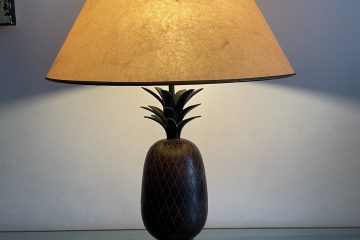
Brass blends naturally with chinoiserie. A Chinese-style brass lamp It brings the same oriental feel, but in a more understated way than a lacquered piece of furniture.
How to decorate with chinoiserie without going over the top
- Choose a statement piece and surround it with neutral colours.
- Use a colour from the piece – such as red or gold – on a cushion or a picture.
- Combine chinoiserie with furniture featuring simple lines or mid-century design.
- Use the porcelain in pairs to create symmetry.
Find storage units, lamps and accessories with an oriental feel at the Deco Reg shop. One-off items available for collection in Barcelona.