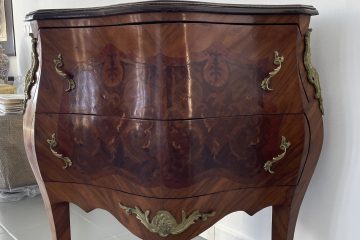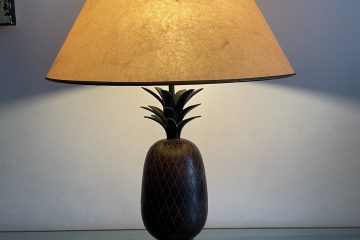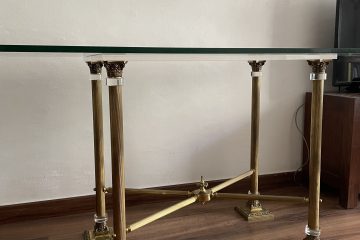

Brass and glass tables are one of the great classics of 1960s and 1970s furniture. Light in appearance, bright and elegant, they fit just as well in a modern flat as they do in a house with antique furniture.
Why do they work so well?
The glass allows light to pass through and makes the table appear to take up less space, which is very useful in small living rooms. The brass adds warmth and a golden sheen that complements wood, marble, velvet and neutral tones.
The most popular styles
- Maison Jansen style: sleek lines, slender brass legs and thick glass tops, such as this one vintage table from the 1960s.
- Italian design from the 1970s: combinations of brass, chrome and glass with clean lines, such as this one coffee table by Romeo Rega for Renato Zevi.
- Hollywood Regency: more decorative designs, faux bamboo and sculptural details. We explain this in our Hollywood Regency style guide.
Glass takes centre stage: the case of Fiam
In the 1970s, the Italian firm Fiam, founded by Vittorio Livi, took curved glass to a whole new level with pieces crafted from a single sheet of glass. This Curved glass pouffe, in the Fiam range, follows the same concept: a wave-like shape that can be used as a seat, a side table or a sculpture.
How to choose the right size
- A coffee table usually looks best when it is about two-thirds the length of the sofa.
- Leave a gap of about 40 to 45 cm between the table and the sofa.
- For an entrance table or desk, check the height: between 72 and 76 cm is standard.
Caring for brass and glass
Clean the glass with a microfibre cloth and an ammonia-free glass cleaner. Dry the brass with a soft cloth and, if you want it to shine more, use a specialist metal cleaner sparingly. Many pieces have an original patina that should be preserved. Use coasters and avoid dragging heavy objects across the tabletop.
Discover all our vintage tables y occasional furniture in the shop.